What distribution reliability means
Distribution reliability is how consistently a platform expands your posts beyond the test audience when your core audience should respond.
It is a system trust signal, not a content score. A reliable system expands posts predictably when it has confidence in your audience response.
The test-audience loop
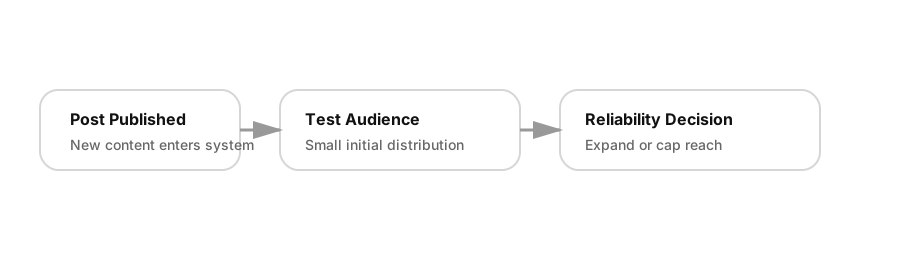
Short-form distribution begins with a small test audience. The platform observes early response and decides whether to expand reach.
Key properties of the loop:
- Early response determines expansion
- Expansion confirms (or weakens) confidence
- Repeated cycles build or erode distribution trust
"My posts feel random."
Escape vs cap
Escape Rate is the primary reliability metric. It measures how often posts leave the test audience and reach broader viewers.
A low escape rate does not automatically mean bad content. It often means low confidence or unclear audience alignment.
A cap happens when the system repeatedly stops expansion after testing.
Why consistency beats novelty (most of the time)
Reliable distribution favors predictable response. Novelty can spike reach, but it often increases volatility without stable escape. Signals that matter: - Escape Rate consistency over multiple posts - Volatility vs escape (reach quality linkage) - Early signal consistency (qualitative, not just numeric)
Consistency creates confidence. Confidence creates reliable expansion.
How Audiencely measures reliability
Audiencely treats reliability as a distribution trust system. We measure: - Escape Rate trends and stability - Volatility vs escape to separate noise from durable expansion - Early signal consistency across recent uploads
This clarifies whether reach changes are structural or just variance.